
Decarbonization often comes up in conversations about buildings and energy, but it's worth talking about what it means and what it looks like in practice. At Lynk Engineers, we regularly work through these questions with clients. This post covers the basics: what decarbonization is, how it affects the electrical grid, and how thoughtful building design can help address both.
What Decarbonization Means for Buildings
Building decarbonization, at its simplest, means heating buildings with electricity rather than burning fossil fuels.
Heating buildings with both electricity and fossil fuels like natural gas, propane, and oil has been happening for a long time. Those systems are well understood and widely installed. But combustion produces carbon dioxide, and buildings that burn fossil fuels for heat contribute to roughly 13% of total U.S. carbon emissions (U.S. EPA 2025).
With this understanding, the focus now is on how to use electricity more responsibly and efficiently, in ways that reduce our carbon footprint without simply moving the problem somewhere else. With the right systems and careful design, electric heating can work financially as well as environmentally.
Pressure on the Grid
The transition of buildings from gas to electric heat puts more load on the electrical grid. The grid can handle additional demand, but with the rapid pace of technology and growth, it's increasingly being stretched. One of the more significant challenges is managing peak demand.
Utilities must design and build their systems to handle that peak moment, even though demand is much lower most of the time.
When you chart electricity demand over the course of a day, solar generation reduces demand during midday hours, but when the sun sets, demand climbs steeply as solar drops off and evening loads hit simultaneously. The result is a hard ramp-up that strains grid capacity and increases costs.
Flattening that demand curve is something utilities have a real financial interest in. Building owners do too since demand charges are a costly part of commercial electricity bills. The question is how to do it.
Storing Thermal Energy in Buildings
One practical answer is thermal energy storage, and it's an area where building design can make a difference.
Heat is a form of energy. When a building absorbs heat during the day, or when mechanical systems produce heat as a byproduct, that energy can be captured and stored rather than lost. The stored thermal energy can then be used later, during cooler overnight hours or morning heating loads, when grid demand is lower, and electricity is cheaper and greener.
This load shifting concept is sometimes described as treating a building like a thermal battery. Instead of storing electricity, you're storing heat. The strategies for doing this range from relatively straightforward, like heat pumps and insulated water tanks that hold heated or chilled water, to more sophisticated approaches like phase-change materials or ground-source systems capable of storing energy seasonally. With each strategy, the underlying goal is consistent: capture energy that would otherwise be wasted and use it when it's most valuable.
The Sorenson Center at the University of Utah
A recent project illustrates how this works in practice. The James LeVoy Sorenson Center for Medical Innovation (SCMI) at the University of Utah is a nearly 60,000-square-foot, four-level building designed to support advances in medical research, device development, and life sciences training. The cutting-edge facility, designed by VCBO Architects, opened in April 2026. Our engineers developed the mechanical systems for the Center with energy efficiency and decarbonization as central goals.
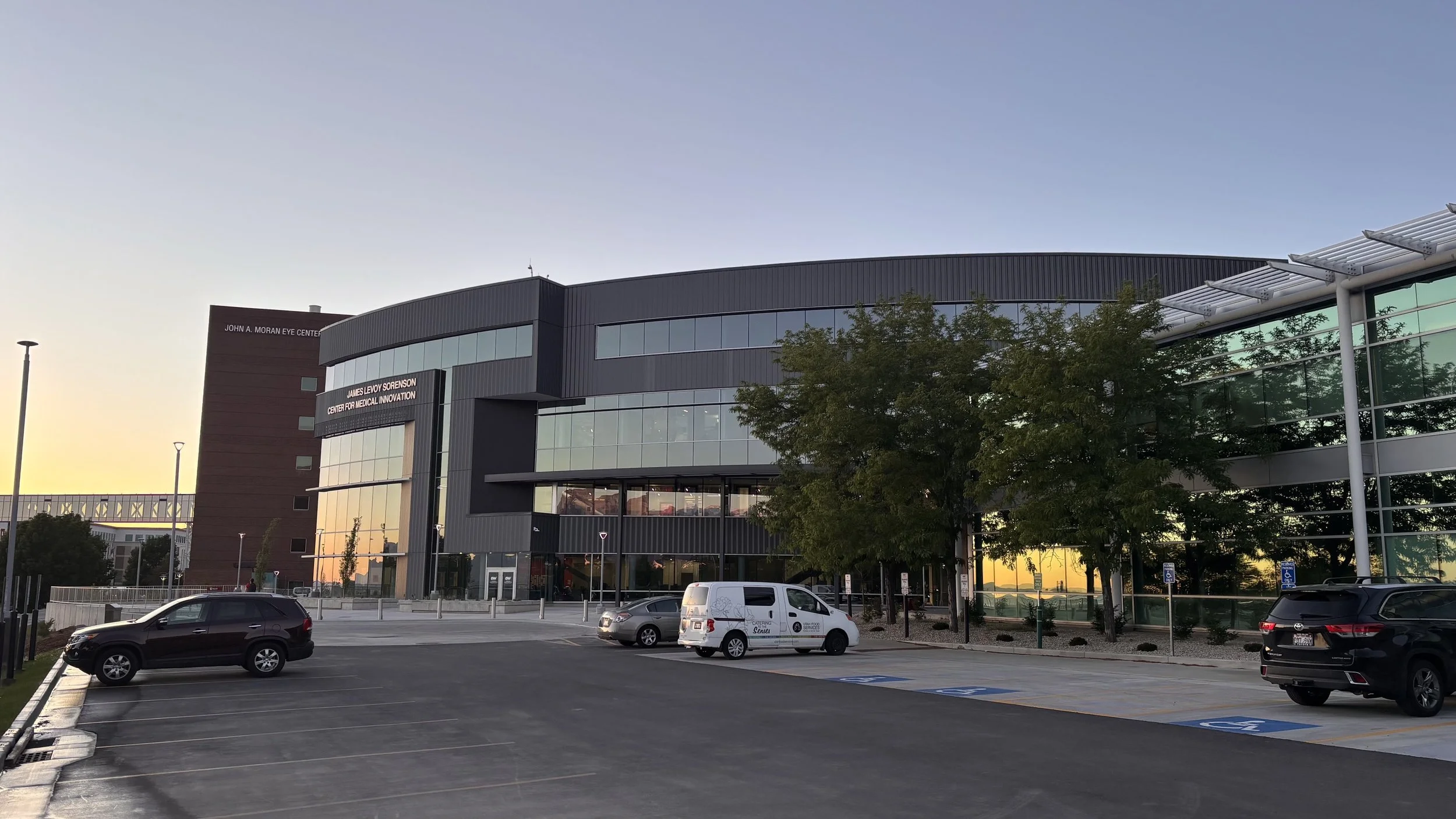
The James LeVoy Sorenson Center for Medical Innovation (SCMI) at the University of Utah
For a building built around the idea of innovation, it was an approach that fit. The SCMI system incorporates a water tank that captures and stores thermal energy from the building during the day. In turn, that stored energy helps heat the building the following day, reducing the peak load placed on the grid and lowering energy costs in the process.
Jarrett Capstick, COO of Mechanical Engineering at Lynk, led the mechanical design for the project. "By storing thermal energy on-site and using it during peak demand hours, we're shifting when the building draws from the grid. That reduces demand charges, lowers energy costs, and cuts the building's carbon footprint. Additionally, first costs are reduced by decreasing the size of the source equipment, such as boilers and cooling towers. In the case of SCMI, the boilers were sized at 70% of a traditional system. It's a solution that works on multiple levels," Capstick said.
“In the case of SCMI, the boilers were sized at 70% of a traditional system. It’s a solution that works on multiple levels.”
Where Things Are Heading
Decarbonization is increasingly reflected in utility programs, building codes, and municipal energy goals. And the tools available, like heat pumps, thermal storage, and improved building envelopes, have matured considerably. The economics continue to improve as well, particularly when demand charges, utility incentives, and long-term operating costs are factored in.
At Lynk Engineers, we work with clients to find design approaches and solutions that make sense for their specific buildings and goals. If you're working through energy efficiency or electrification questions on a project, we're happy to talk. You can reach us at www.lynkengineers.com.